

The Marina Software Buyer's Guide

The Five Questions to Answer Before You Talk to Any Vendor
Doing the homework that lets you pick the right vendor
By the time most marina operators sit down for their first vendor demo, they've already lost. Not because they picked the wrong vendor. Because they didn't do the homework that would let them pick the right one.

Vendors will sell you the wrong solution if you arrive without the right questions.
This chapter walks through five questions you should answer before booking your first demo. Each is simple to ask. Most operators discover they're harder to answer than they look.
Get clear on these five, and you'll evaluate three vendors in a third of the time it would otherwise take.
Gartner research on B2B software purchases suggests roughly seven in ten fail to meet expectations within the first 18 months. The most common cause: buyer misalignment with their own requirements before evaluation began.
Question 1: What's actually broken about how you run your marina today?
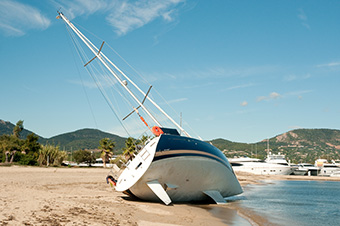
"We need new software" isn't an answer. It's a feeling.
The useful version of this question forces specificity. Three concrete things that didn't work last season. Not categories. Instances.
Specificity changes the entire evaluation:
- Generic pain → generic demo → no useful comparison
- Specific pain → capability test → clear yes or no per vendor
Complete these three sentences. If you can't fill in three, you're earlier in your evaluation than you think.
- "Last season, the worst part of my week was..."
- "The task I dread most because it takes too long is..."
- "If I could automate one thing about how we run our marina, it would be..."
"Our reporting is bad."
"I can't see paid slips, overdue slips, and renewal-due slips on a single screen. Our current software shows them in three separate reports that don't reconcile."
Vendors will mirror the specificity you bring. Walk in with three concrete pains, and every demo becomes a capability test instead of a sales pitch.
Question 2: Who's actually going to use this software, and what does their day look like?

The person buying marina software is rarely the primary user. Owners and general managers make the buying decision. Harbormasters, dockmasters, front desk staff, and accounting use the software every day. Their priorities are different.
Demos designed for buyers won't tell you whether the software is usable for the people who actually have to use it.
Owners and GMs
Care about reporting, pricing, growth. In a demo they notice whether the numbers add up.
Daily operators
Front desk, dockmaster, harbormaster. Care about speed and mobility. They notice whether a task takes 3 clicks or 8.
Finance and accounting
Care about reconciliation, audit trails, integration. They notice whether month-end will be painful.
If a vendor can only demo from a desktop, but half your team works from tablets on the dock, you're seeing the wrong product. Insist on a tablet demo. If they can't, that's information.
List every person in your operation who will use the software daily, weekly, or seasonally. For each, write a one-sentence description of their busiest workday.
The harbormaster handling 40 transient check-ins on a Saturday afternoon needs different things than the accountant doing the month-end close.
Don't let the buyer evaluate user experience alone. The people who'll use the software daily notice things the buyer won't. Get them in at least one demo.
Question 3: What's your real budget, and what does "total cost" mean?
Most operators come into evaluations with a monthly software budget in mind. Almost none have done the math on total cost of ownership.
Flat platform fee
Predictability high, does not change with size. Best for operations of any size and transient-heavy marinas.
Per-slip or per-user
Predictability medium, scales with operation size. Best for predictable, mid-market operations.
Per-transaction or per-booking
Predictability low, scales with revenue volume. Small entry price, expensive at scale.
A marina processing 2,000 transient bookings per year at $80 average value, charged 3% per booking by their vendor:
$80 × 2,000 × 3% = $4,800 / year
That's transaction fees alone. Add per-slip fees on top, and a "cheap" per-booking platform becomes the most expensive option at scale.
Three quotes to request from every vendor:
- Total annual cost at your current volume
- Total annual cost if transient revenue doubles
- Total annual cost if transient revenue halves
The shape of those three numbers tells you what kind of pricing model you're really dealing with.
Transient-heavy marinas on per-booking pricing can pay four to six times more over a three-year contract than they would on flat-rate pricing, depending on transient revenue concentration.
Chapter 16 walks through total cost of ownership with a downloadable calculator. This chapter covers what to figure out before talking to vendors. Chapter 16 covers what to do with their answers.
Pricing model matters more than monthly price. Get three quotes per vendor: current volume, double, and half. The shape of those numbers reveals the real cost.
Question 4: What's your peak season, and when does switching actually have to happen?
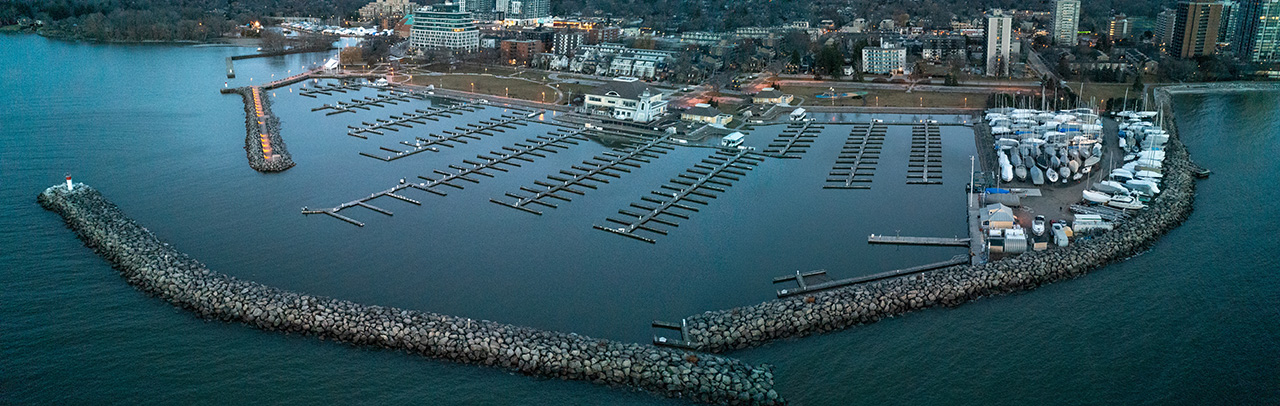
You can't switch marina software during peak season. That much is obvious. What's less obvious: the off-season window for switching is shorter than you think.
A typical marina software migration:
| Phase | Duration |
|---|---|
| Data audit and cleanup | 2-3 weeks |
| Configuration and import | 2-3 weeks |
| Training and parallel run | 2-4 weeks |
| Cutover and post-launch support | 2 weeks |
| Total active work | 8-12 weeks |
If your peak season runs April through September, your full off-season is October through March. But:
- The first month is recovering from peak
- The last month is preparing for next season
- Realistically: four months of active migration window
Vendors who promise three-week implementations are either overpromising or have systematized something that won't actually work for your specific data and workflows.
If a vendor can't give you a written implementation timeline that includes data migration, configuration, training, parallel running, and post-cutover support, they won't be able to deliver one after you've signed either.
For spring-peak operations, plan to be in your new software by the end of February. That gives you a six-week buffer for things to settle before opening day.
Operators who try to cut over in March find themselves training staff and ironing out bugs the week before opening. Worst possible time.
Your switching window is shorter than your off-season. Plan for migration to complete six weeks before peak, not the day before.
Question 5: What does "we picked the wrong vendor" look like two years from now?
This is the question almost no buyer asks. It's the most important one.
In every marina software evaluation, you're not just picking a vendor. You're picking what happens if it doesn't work out.
You're not just picking a vendor. You're picking what happens if it doesn't work out.
Can you get your data out?
Every vendor says you own your data. Most won't say what format you'll get it in. There's a difference between "we'll export your data" and "we'll export it as a structured, importable file with customer history, transactions, slip assignments, and contract terms preserved." Ask specifically. Get it in writing.
What does your contract say about leaving?
The clauses that matter: auto-renewal terms, termination notice periods, early termination fees, data ownership and export rights, price escalation limits. Vendors expect you to gloss over these. Don't.
Will the vendor still exist?
Marina software is a small market. Vendors get acquired, fold, or pivot. Ask how long the founding team has been in this market, what the five-year plan is, what the customer retention rate is, and whether they're profitable.
Imagine yourself two years from now, frustrated with your software vendor, asking "should I switch?" What would make that decision easier? What would make it harder?
Build the answers into your evaluation now, before you've signed anything.
Chapter 11 covers data ownership, portability, and vendor lock-in red flags in detail. Chapter 17 covers contract clauses to negotiate before signing.
Every contract has an exit. Negotiate it in the offer phase, not when you're trying to leave.
Quick reference: your pre-evaluation checklist
Before you book any vendor demo, you should be able to answer:
- Three specific things that didn't work in your operation last season
- A list of every person who will use the software, and what their busiest workday looks like
- Your transient booking volume, average value, and seasonal revenue spread
- Your realistic switching window, accounting for recovery and prep
- Your data export expectations, contract dealbreakers, and vendor stability requirements
If you can answer all five, you're ready to evaluate vendors. If you can't, the right next step isn't booking more demos. It's spending another week getting clearer on your own situation first.
Worksheet: the five questions
Question 1: What's broken? Three specific things that didn't work last season. Question 2: Who will use this?| User | Frequency | What their busy day looks like |
|---|---|---|
| Annual transient booking volume | |
| Average booking value | $ |
| Annual payment processing volume | $ |
| Peak season months | to |
| Current monthly software spend | $ |
| Quote to request | Annual cost |
|---|---|
| At current volume | $ |
| If transient revenue doubles | $ |
| If transient revenue halves | $ |
| Peak season starts | |
| Peak season ends | |
| Realistic switching window | |
| Target go-live date |
Data export I would want to be able to get:
Contract terms I would want in place:
Evidence of vendor stability I would want to see:
What marina management software actually is
A plain-English explanation of what the modules typically include and how the pieces fit together. Cuts through vendor jargon.
Read Chapter 2 →References and further reading
- Sharper MMS, Map the Switch Migration Assessment
- Association of Marina Industries (AMI), industry research and benchmark data. marinaassociation.org
- National Marine Manufacturers Association (NMMA), U.S. Recreational Boating Statistics. nmma.org
- Storable Marine, AMI, and Marina Dock Age, Navigating the Numbers: 2026 Marina Operator Insights & Technology Automation
- Gartner, B2B SaaS buying behavior research