

The Marina Software Buyer's Guide

If You Operate Marina Plus Campground or RV Components
Mixed-asset operations, and how to tell which software actually handles both
If your property is part marina and part campground or RV park, you already know the software problem: most marina software treats campgrounds as an afterthought, most campground software treats marinas as one, and you're the one living in the gap. This final chapter is about closing that gap deliberately, because handling both well isn't just tidier, it's where your best revenue lives.
Two operations, one property
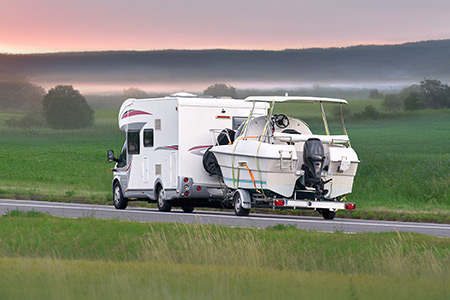
You run a marina and a campground or RV park as one business, on one property, often with shared staff, shared utilities, and a shared front desk. Operationally, though, they behave like two different animals. The water season and the land season may not line up. A transient boater and a weekly camper book on different rhythms, expect different things, and get billed in different ways.
Most software makes you choose between two bad postures: pretend the two sides are the same and cram one into the other's model, or run them as if they're entirely separate businesses that happen to share a parking lot. Neither reflects how you actually operate, and both cost you.

One property, two operations. Software that pretends it's one, and software that splits it into two, both miss what you actually run.
Why most software fumbles this
The reason is structural: the software market is split down the middle. Marina platforms are built for slips, fuel, and boats, with campgrounds bolted on later. Campground platforms are built for sites, hookups, and rigs, with the marina as the afterthought. Very little is genuinely designed for both from the ground up.
So mixed-asset operators usually land in one of two uncomfortable places: two separate systems that don't talk to each other, which means double entry, no single view of a customer, and monthly reconciliation pain; or one system that runs one side beautifully and the other side poorly, which quietly punishes whichever side drew the short straw.
The tells are easy to check. Does the software model slips and campsites both as first-class things, or is one clearly forced into the other's data shape? Does it handle a fuel dock and RV hookups natively? Can it run two different seasonal calendars at once? Where the answer is a workaround, that's the side that will hurt.
One system or two?
This is the central decision, and there's no universal right answer. It comes down to how complex each side of your operation is, and whether a credible both-sides product actually exists for your mix.
One combined system
A single platform that handles marina and campground together gives you one customer record, one statement, and one report across both assets. It's the cleaner model when a genuine both-sides product exists and is strong enough on each side. The risk is the jack-of-all-trades problem: a system that does both but neither one deeply.
Two integrated systems
Best-of-breed on each side, joined by an integration. This wins when each side is complex enough to need specialist tooling. But it moves the risk onto the seam: the integration effectively becomes the product, so the integration-quality questions from Chapter 8 become make-or-break. Does the customer, the booking, and the revenue data actually flow both ways, in real time, or are you back to double entry with extra steps?
The revenue case
Here's why solving this well matters more than tidiness. Mixed-asset operators capture more revenue per customer than single-asset ones, and unified software is the thing that unlocks it.
The boater who also camps for the weekend. The campground guest who fuels up and rents a kayak at the dock. That cross-sell is the entire strategic reason to run both under one roof. But you can only capture it if your software sees the whole customer: one record across both assets, so you can recognize the relationship, market across it, and put it on a single statement.
Two disconnected systems hide that customer from themselves, and the cross-sell quietly leaks away. So this isn't only an operational question, it's whether you can actually realize the revenue advantage that running both was supposed to give you, the net-impact thinking from Chapter 16 applied to your specific mix.
Does the vendor actually handle both?
Every vendor will say "yes, we do both." Your job is to make them prove it rather than claim it, using the demo discipline from Chapter 12.
Run a real cross-asset scenario, live: a guest who books a slip and a campsite for the same weekend, pays once, and turns up on one customer record and one report. Watch where the software strains. Then ask the direct questions: are slips and sites both first-class, or is one a workaround? Can it run your two seasonal calendars? Are fuel and hookups both native? Is there truly one customer across both assets? And if it's two integrated systems, what exactly syncs between them?
Mixed-asset operations fit assessment
Describe your marina component (slips, fuel, and more), your campground or RV component (sites, hookups), and your shared infrastructure. Get a vendor-fit assessment that flags which platforms genuinely handle your specific mixed-asset case, and which only claim to.
A "we do both" where one side is visibly a bolt-on, or a combined report that's really two separate reports stapled together. And if you also run multiple properties, layer the portfolio questions from Chapter 22 on top of these, because the two kinds of complexity compound.
Decide deliberately between one combined system and two integrated ones, insist that both sides are first-class rather than one being a bolt-on, and hold out for one customer record across assets. That single record is what turns two operations on one property into more revenue per guest.
That's the whole framework: the five questions to answer before you shop, the five dimensions to judge any vendor on, the demo and reference work, the commercial conversation, the migration, and the specialized situations that fit your operation. The hard part was never a lack of options. It was knowing what to ask and what good looks like. Now you do.
Whatever you decide, decide it on evidence: your own pains, a scorecard filled in the same way for every vendor, and the net-impact math. The best marina software is simply the one that fits how you actually operate, and you're now equipped to find it.
Ready to put this to workBook a demo with Sharper MMS
Bring your questions, your scenarios, and this guide. Run the demo the way Chapter 12 describes, and see how Sharper handles the workflows that actually define your operation.
Book a Demo →References and further reading
- Sharper MMS, Map the Switch Migration Assessment
- Association of Marina Industries (AMI), industry research and benchmark data. marinaassociation.org
- National Marine Manufacturers Association (NMMA), U.S. Recreational Boating Statistics. nmma.org
- Storable Marine, AMI, and Marina Dock Age, Navigating the Numbers: 2026 Marina Operator Insights & Technology Automation